
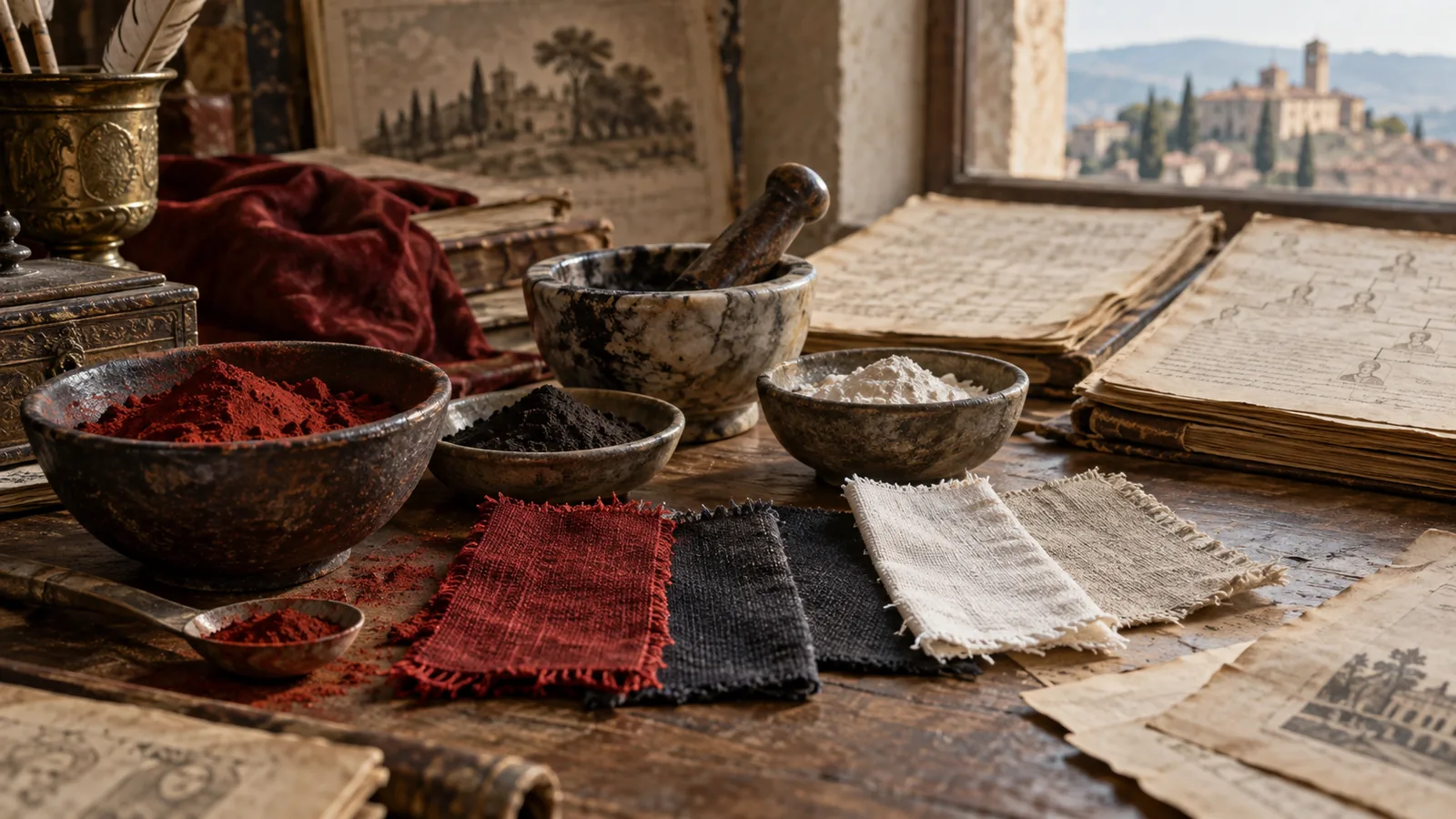
Surnames linked with colors look easy. Rossi, Rosso, Bianchi, Neri. You read them and immediately imagine hair, skin, clothes, a nickname born in a village.
Maybe that is right. Maybe not. Colors were a simple way to distinguish people, but because they were simple they could become surnames in many different places.
Red and Its Forms
Rossi and Rosso sound related at once. Then come Rossetti and Rossini, with suffixes that make the matter more interesting and more delicate.
If you find two forms in the same town, do not merge them immediately. See whether the people match. Can a man be written Rosso in one record and Rossi in another? Yes, it can happen. But check wife, parents, age, witnesses. Without those pieces, sound is not enough.
White, Black, Brown
Bianchi, Neri, Bruni and Moretti may recall physical appearance, complexion, hair, perhaps nicknames. But the explanation is not always visible in records.
Usually you will not find a document saying why a family was called that way. You will find people. Occupations. Houses. Marriages. Names that return. The color meaning stays in the background and helps you read, not decide everything.
The Town Matters
A color nickname often began in one precise community. It helped distinguish one person from another. In one village there might be an Antonio called the red one; in another, a Giovanni called the white one. After a few generations, the nickname could already be a surname.
This is why territory matters. Two distant Rossi families are not related because of the color. Start with the records of your own line, then widen the comparison.
A Visual Word, a Concrete Search
Color surnames help the imagination. They are immediate, almost physical. But the image should stay light. If it weighs too much, it begins to guide the research instead of the records.
Note variants, search nearby forms, check places. Above all, do not hurry to explain everything. Sometimes the surname preserves a very clear nickname. Sometimes it preserves only a word carried from one generation to another.
In records, however, the color is rarely explained. You will not often find a sentence saying: this family was called that because of red hair. More often you find a name that continues quietly, record after record. That is why you have to stay with the documents, even when the surname looks clear.
With Bianchi and Neri, habit is the risk. The words are common, we understand them immediately, and because of that we stop looking. It is better to note where they appear, whom they marry, whether they stay in the same town or move.
Diminutive or altered forms ask for even more calm. Rossetti is not automatically a branch of Rossi. Moretti does not by itself describe an ancestor’s appearance. The surname suggests. Then the records answer, when they can.
There are also cases where the color may not refer to a person, but to a house, a sign, a piece of land, perhaps a local way of naming a group. Not always. It should not be invented. But it belongs among the possibilities. Surnames were born inside living communities, not inside tidy dictionaries.
When you find a color surname, try to collect the variants of the same family group. Not only the neat form, or the modern one. Also the odd form, the shortened one, the one that looks wrong in the index. Sometimes the least tidy form keeps the older trace.
Time matters too. If a form appears already in the earliest available records, the explanation may be older. If it appears suddenly, after years in which the family was written another way, you may be looking at a recording variant, not a new origin. Small difference. It changes the reading.
It is useful to resist the image that comes first. A color surname naturally creates a picture in the mind. That picture may be right, or partly right, or only an old word that remained. The record decides how much weight it deserves.
So keep the meaning, but keep it light. Let it accompany the research. Do not let it replace it.
A small, patient table often helps: form found, year, record, place, people involved. Nothing fancy. Just enough to notice whether a pattern is real or only a repeated impression.

Leave a Reply