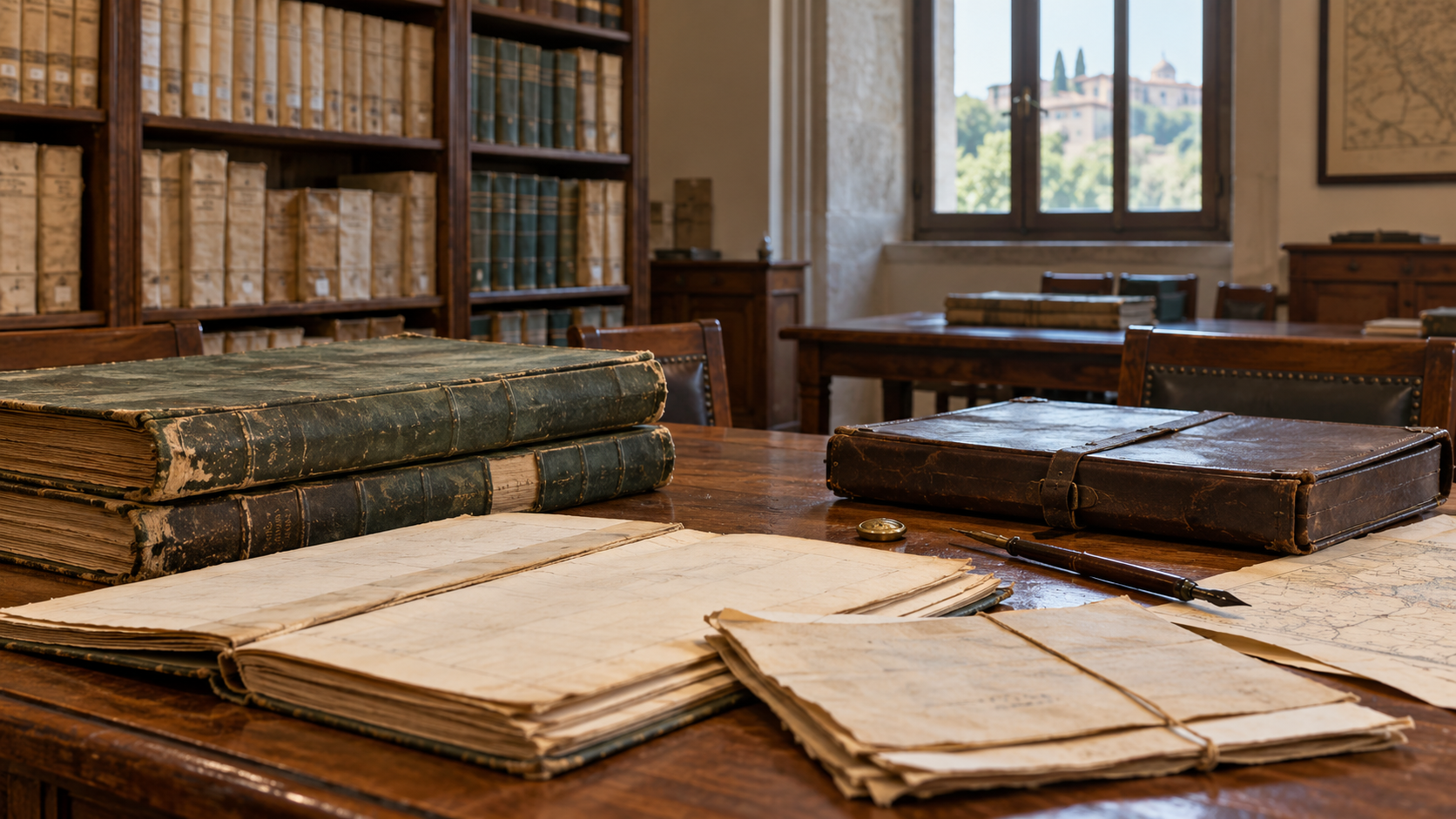
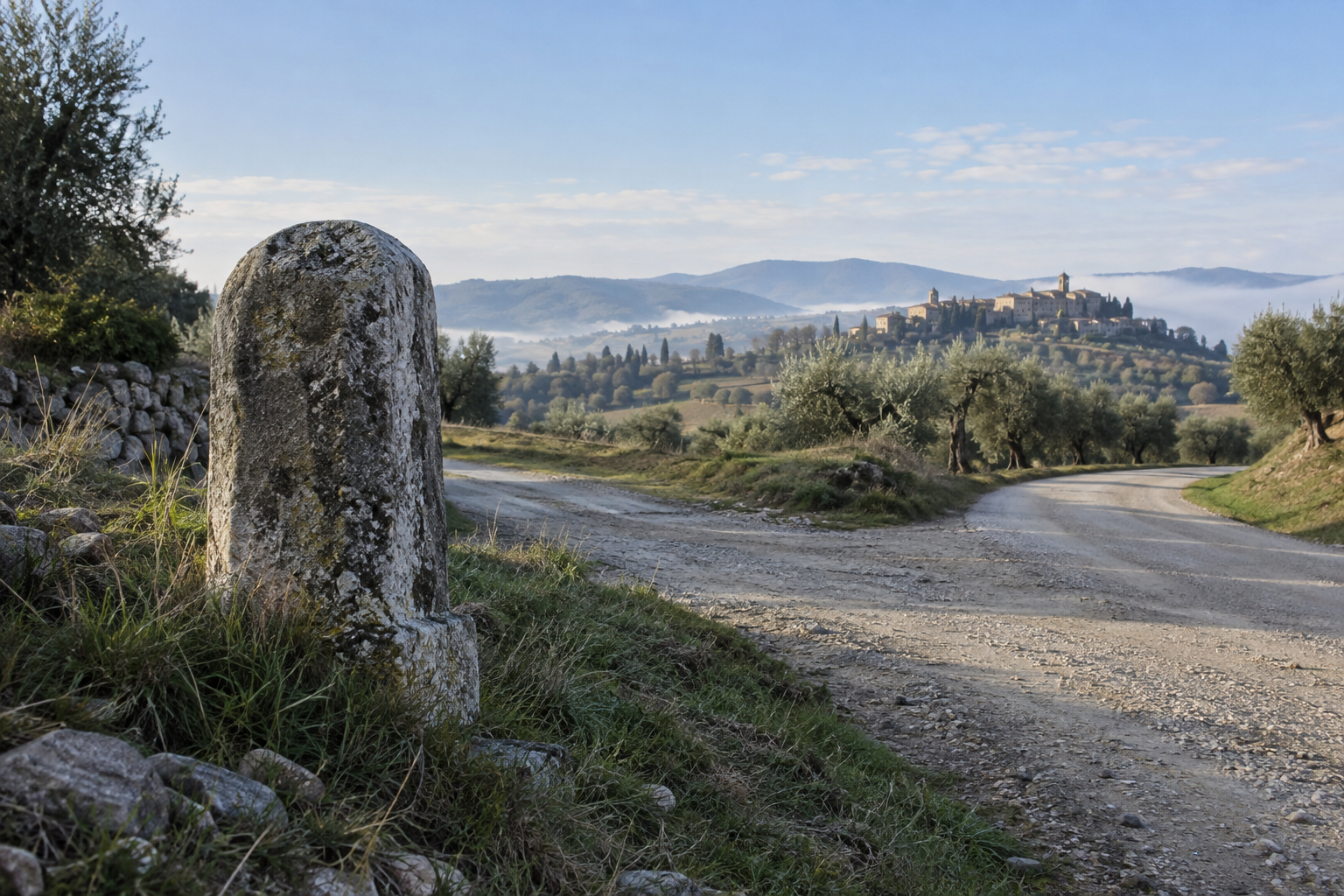
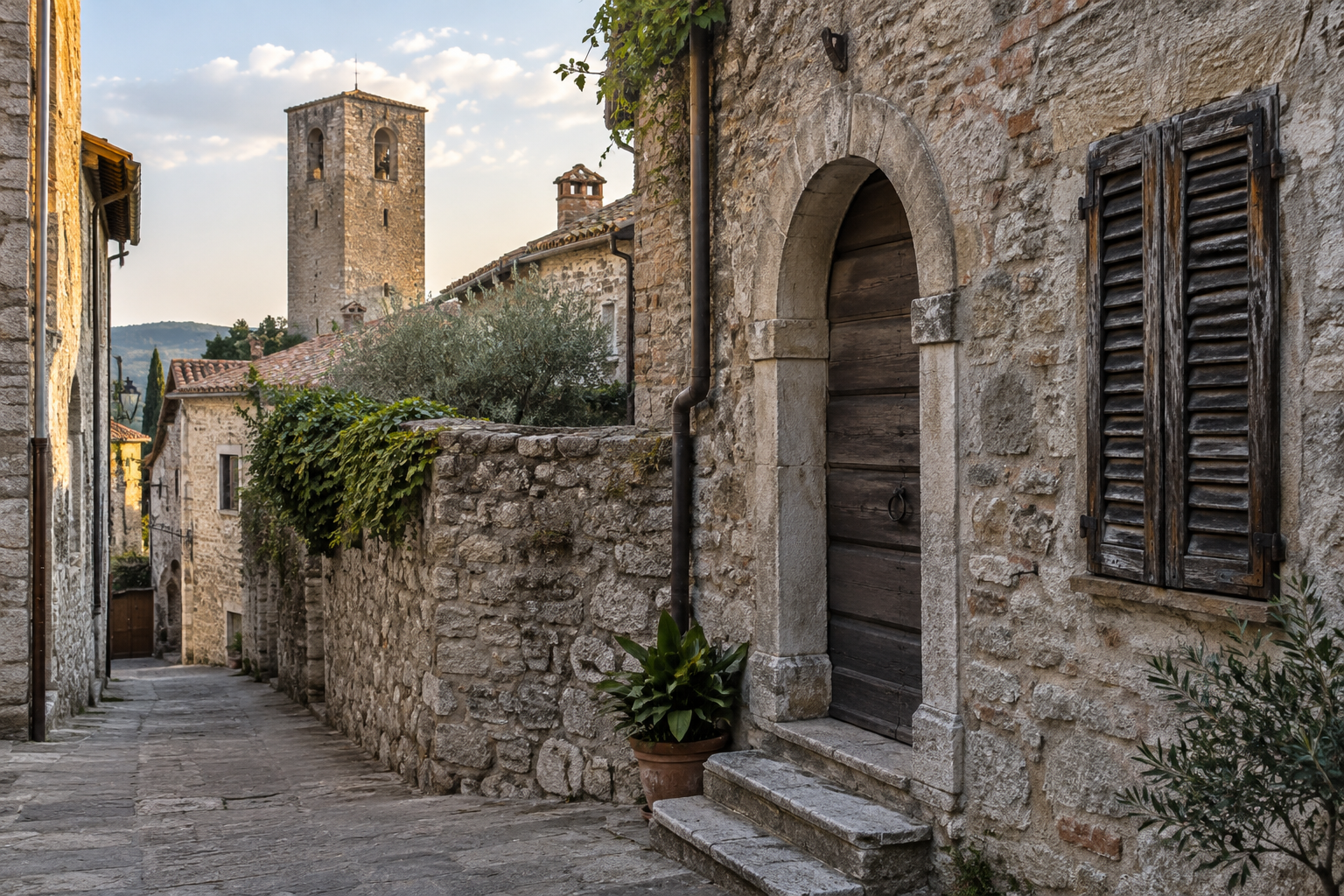
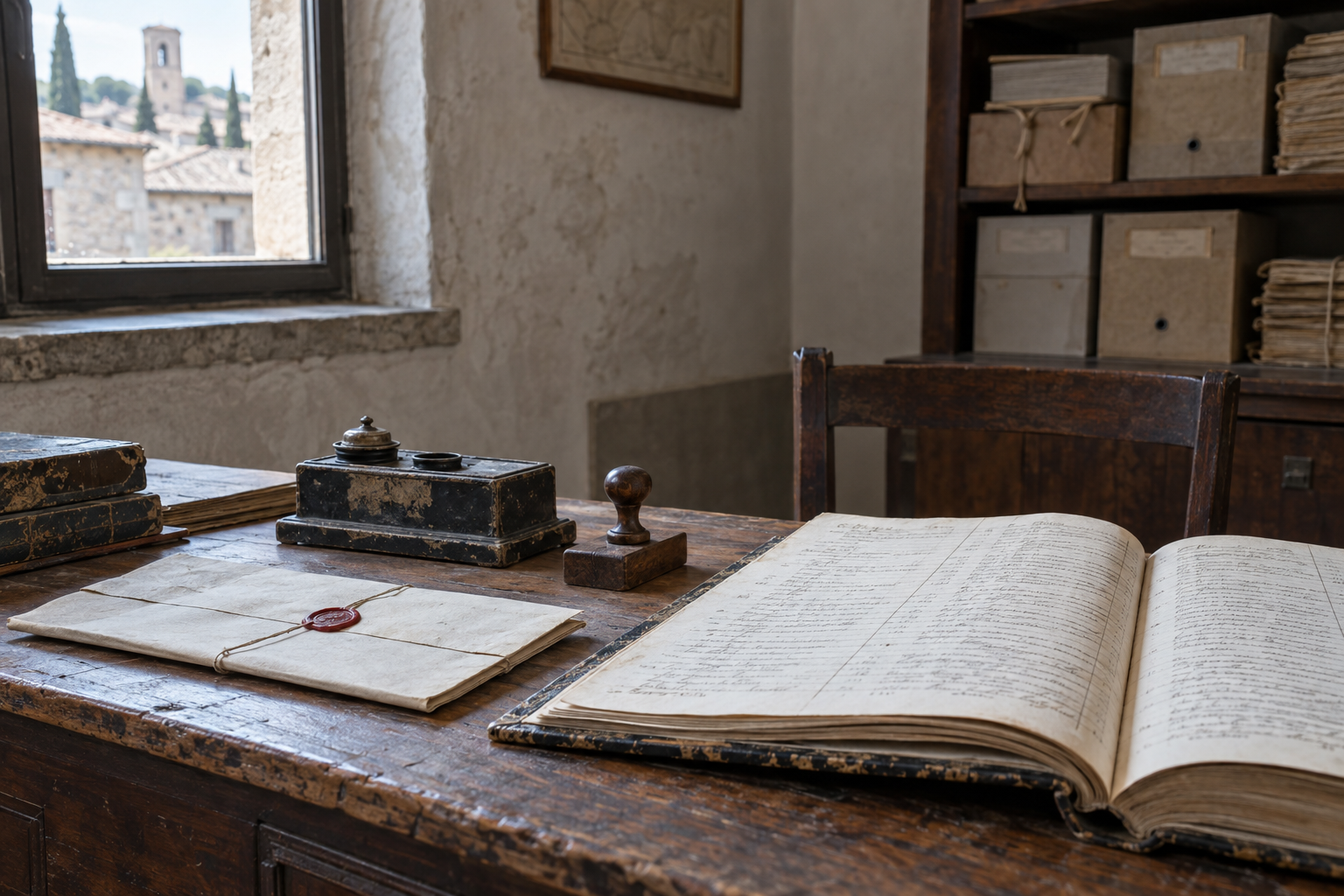
A surname such as Soldati creates an immediate picture: a uniform, a barracks, perhaps a war. That reaction makes sense. Family records, though, usually tell a less tidy story, and that is where the interesting part begins.
Words like soldier, captain, and knight had been moving through everyday speech for centuries. They could refer to work, an office, a nickname for someone with a forceful manner, or an old memory already fading inside a family. Once a word became a surname, it did not hand down a finished biography. It offered a lead. The records have to do the rest.
Do not take the name literally too soon
Suppose you find a nineteenth-century marriage for Giovanni Soldati, a carpenter and son of farm workers. The surname alone cannot turn his father or grandfather into career soldiers. The family may have acquired it long before, in a completely different setting. It may have begun as a nickname for a man who had served, a veteran people noticed, someone employed around a garrison, or simply a person who carried himself a certain way.
The same care is needed with Soldato. The singular and plural forms are not automatically branches of one original family. Older records change a letter easily, but there is no benefit in correcting everything at once. Copy the spelling you see. Then compare parents, ages, houses, and witnesses.
The first useful clue is usually continuity. Is the family in the same place for several generations, or do the records show a sudden arrival? A birth registered soon after a marriage celebrated elsewhere may tell you more than a handsome explanation of the word.
Three terms, three different questions
Capitani and Capitano suggest a rank, yet rank is not the only possibility. In some communities the word could remain attached to a local duty or to the way an important person was addressed. Start with occupations and offices written in the records. Do not go looking for a battle before you have found a date.
Cavaliere and Cavalieri bring another temptation: a title. A surname can be older than the title now imagined, however, or it may once have had a practical, popular, even teasing sense. Where they survive, notarial records can help. Property papers, contracts, signatures, and the words used around a person show how that person was actually known.
Guerrieri and Guerriero raise a different possibility again. There is no need to invent a famous ancestor. Names like these also travelled through nicknames, family stories, and descriptions of character. In a small town, a reputation or a story repeated for years could stay with a household.
When the search gets real
Begin with the closest record you have and work backward, one generation at a time. In birth and marriage records, note occupations, addresses, and witnesses. If you find a military call-up paper, service record, or discharge document, that is excellent: it gives places and dates. Do not treat its absence as proof of the opposite. Papers were not always kept by families, and many remain in archives you have not yet reached.
A surname such as Armellini may lead toward older words and several possible explanations. This is where it pays to slow down. Check variant spellings, but do not merge people merely because the names sound alike. One wrong line can pull a family tree off course for quite a while.
Write down any family story about military service exactly as you heard it, even when it is vague: “he came from the north,” “he was in the army,” “he had a medal.” Set it beside the records. Sometimes the story finds a very exact confirmation. Sometimes it remains a household memory. Both belong in family history, as long as they are not confused with each other.
You may eventually find a soldier in the line. Or a blacksmith, labourer, or innkeeper carrying a name that had begun long before. The second discovery is not smaller. It is simply your family, seen a little more closely. Keep your notes in order: a call-up date or a signature found later can change the meaning of an old family story. It also gives you a sensible next question to ask.
A surname such as Lombardo, Greco or Romano can look like an arrow pointing to one precise place. It is easy to imagine an ancestor who arrived from Lombardy, Greece or Rome. Sometimes there really is a story of movement. At other times the surname is much older than the part of the tree we can document, or began as a label used inside one local community.
The surname can suggest a question; it cannot decide the answer. In Italian towns, a newcomer might be recognized by where they came from. The same could happen to someone with links to a place, a different way of speaking, or membership in a group known by that name. Then the word stayed with the children.
Start somewhere other than the name
With a Calabrese, Pugliese or Siciliano family, do not begin by looking for a distant migration. Begin with the last town you know for certain. Take a marriage, baptism or birth record. Notice where the parents came from and lived. Generation by generation, the trail narrows on its own.
A Pugliese family may have been rooted in the same town for two hundred years. Nothing is unusual about that. The surname may recall a far older move, or have held a meaning that no longer matches our first impression. When records show a recent arrival, then follow the town of origin actually written on the page. That is a real lead.
Greco and Lombardo do not always tell modern geography
Greco and Greci may recall an origin, but the word should not be placed straight onto today’s maps. The same is true of Lombardo and Lombardi. Words travel through time; boundaries, local identities and writing habits change. Similar forms do not join two branches by themselves.
When you find a variant, place it beside the main form instead of correcting it. A Greco may become Greci in a run of records because of spelling; it may also be another family. Parents’ names, ages, witnesses and homes tell the difference. Less glamorous than a travel legend, perhaps, but it works.
Four surnames, four possible paths
Toscano and Toscani may point to a person from an area known as Tuscany, or to a group already called that elsewhere. Sardo and Sardi open a similar question. They should not be used to declare an origin without records.
With Tedesco and Tedeschi, caution matters even more. Such words may carry a memory of origin, a nickname, a trading contact or a local expression we no longer know. Do not give a modern person a national story merely because the surname appears to do so.
A useful method is to keep two columns of notes: surname forms on one side, proved places and dates on the other. After a few generations you will see whether the story really points toward a move, or remains in the same territory. Either way, you have learned something real about your family.
Family movements often leave small marks: a father born elsewhere, a mother described as an outsider, a witness from the same town, a child baptized in a different parish. The surname can help you notice these details. The records do the rest.
Dates matter more than the first impression
There is a question of time here, and it is easy to overlook. If the earliest Greco in your line was already living in the same town at the end of the eighteenth century, the move behind the name may be much older. You may never reach it with the records that survive. That is all right. It still tells you where the evidence stops and where a reasonable guess begins.
Make a small table; it does not need to become a project of its own. For each record, note the year, the house or district, the occupation, and the witnesses. After ten or so solid documents, patterns begin to show. Sometimes a second branch really did arrive from elsewhere. Sometimes the surname had been there for a very long time, and the distant-origin idea starts to look less likely.
This sort of research can sit still for months because of one spelling or one town. That happens. It does not mean the trail is wrong. It may simply need a parish book, an archive, or an older record. Keep copies of the documents and write down your doubts as well. You may return later and notice something you passed over the first time.
A home can be a street number, a courtyard, a farmstead, a room over a shop. In family records, though, a home is often a fixed point. You see it in the same street returning, in a district name misspelled by a priest, in the phrase “late son of” followed by the name of a man already dead. That is why surnames such as Casa, Casale, Palazzo and Torre make people look more closely at the places where their family lived.
The temptation is obvious: Casa must come from a house, Torre from a tower. Sometimes the lead is good. A common word, however, can have many lives. It may refer to a building, a place, a nickname or an origin. It may have settled in a generation that records no longer let us reach.
You do not have to solve it at once. Take the first reliable record and notice the residence. Then the next one. When your ancestors stay in the same spot for decades, you have a fact. The hypothesis about the surname comes afterward.
Casa: a small word with many possible stories
Casa may seem too general to help. Yet when it appears beside a district or estate name, it can take shape. A baptism may say “at the Casa”; a contract may mention a house with a garden; an inheritance may distinguish the old house from the new one. Modest words, but they show where people moved.
Case, Casale, Casali, Casini and Casati look closely related at first sight. Do not treat them that way too early. Singular, plural and suffixes can shift in spelling; they can also belong to families that began in different places. Compare ages, parents and witnesses. They tell you whether one form truly leads to another.
What is worth looking for
In parish records, look for the residence; in marriages, the origins of the couple; in death records, who reported the death. When the same neighbour repeatedly appears beside your family, write it down. A story of home also runs through these people: those who shared a courtyard, a road or the same fields.
Towers, walls and palaces do not always name a building
Torre and Torri may recall a very visible structure. In many Italian towns, a tower was a practical landmark: people arranged to meet there, named property after it, or recognized people living nearby. The surname may have kept the word long after the tower stopped mattering in the family’s life.
With Mura, the reasoning is similar. Walls could mark a boundary, a part of the town, or a house built against the enclosure. There is no need to imagine an important family or a special dwelling at once. Sometimes the most useful connection is an old residence description, found almost by chance in a notarial record.
Palazzo and Palazzi need the same care. Today the word suggests something grand. In local speech, it may have meant a familiar building, a part of town, or a house simply known by that name. Context brings many attractive ideas back to size.
Before drawing a tower on your family tree
A surname linked with homes and buildings becomes useful when it meets a solid trace. A Villa family living for generations near a place called Villa offers a lead worth checking. A Borgo family moving from one hamlet to another may instead tell a story of origin, or of a nickname given by the people who received them.
Keep a note of the surname forms and the exact places. Even a modern house number may help recover continuity when you compare it with newer maps and records. Then move backward slowly. You may never find the house where it all began. You can still learn how a family made a place for itself in the world.
When an address changes, do not discard it. Streets are renamed, hamlets move between municipalities, a house is divided or absorbed into a nearby building. Follow the people before following the place name. A Casini who returns with the same siblings and godparents may still belong to your line even when the residence is described differently. Continuity in archives rarely comes from one detail alone.
In a birth record or a contract, you may come across words that sound important: notary, judge, captain, consul, mayor. Sometimes they really are the trade or office of the person described. At other times, many years later, those words have become a surname. Nothing about that is automatic. Family research can go off course when a name is read as a ready-made biography.
Notaro, Notari, Giudice, Giudici, Capitano and Consoli all contain a word of office or responsibility. That may be a lead. It is neither a patent of nobility nor proof that an ancestor held the position.
A name at the bottom of a record
Take a nineteenth-century marriage record. It gives the couple, parents, ages, trades and witnesses. If one of them is called Notaro, look at what surrounds the name: is he actually described as a notary? Does he sign in a distinctive hand? Does he live in one particular part of town? Is he linked with other clerks or landowners? The surname opens a door; the record decides how far you can go through it.
In towns, offices also lived in everyday speech. A man could be known by a role held by himself, his father or one side of the family. Over time, the first meaning faded and the form remained. That is why two families with the same surname may have beginnings far apart from each other.
Notaro and Notari
Notaro is a surname that immediately suggests a desk, registers and signatures. In some cases there may well be a link with someone who drew up legal acts. It would be careless, though, to assign that role to every Notaro ancestor without finding it in writing. Look for occupations, deeds, references in inventories, or municipal records. If they do not appear, the surname still belongs to the story; it is simply harder to explain.
With Notari, the resemblance is obvious, but it does not require merging branches. A final letter may change in a priest’s hand; it may also mark a different family. Ages, mothers, godparents and homes matter here. The usual details, yes. They are what keep a tree standing.
Giudice, Giudici, Capitano
Giudice and Giudici may point toward a judicial function, but also toward a nickname or a local family memory. Capitano and Capitani raise the same question. The word calls up command, yet through time it might have referred to a military, civil or local post, or simply to someone people called that way.
An office is not inherited like a surname
The simplest proof is to look at your ancestors’ real occupations. A Capitani family may include farmers, blacksmiths, builders and innkeepers for generations. There is no contradiction. The surname may have begun much earlier, or in another line, and then continued while everyday life changed completely.
Other surnames, such as Sindaco, Senatore, Magistris and De Magistris, need the same calm approach. The words can sound grand. Research remains very concrete: date, place, relationship, next document.
When you find a person with one of these surnames, note every title that the record actually gives them. Then compare the people around them. A witness who appears repeatedly, a neighbour, a relative who arrived from a nearby town: that is often where a checkable connection appears. Not in the large word of the surname.
You may eventually find a notary, an officer or an administrator. You may also find a long line of ordinary people bearing a name born from a history that can no longer be reconstructed. Both possibilities deserve respect. Archives do not promise a legend. They promise traces.
One simple check often prevents mistakes: try to follow one person through at least three consecutive records. When the same Notaro appears as a farmer at a child’s baptism, as a labourer at a daughter’s marriage, and as a landowner in his death record, you have a small documented story. The surname does not replace it; it merely makes the question of its origin more interesting.
Watch for children given the same name as their grandfather, too. In a small town, Giudice, Capitano or Sindaco may appear many times in one generation. Comparing dates, homes and wives’ names remains the safest route.
In many Italian families, a baptism was more than a date. It was the day when the priest, godparents, a saint chosen through tradition or affection, and a network of relatives all came into view. Those people often appear again decades later at a marriage or in a death record. That is why surnames that seem to recall saints, feast days and devotion attract so much attention in family history research.
Santi, Santo, Santini, Santoro and Santucci seem to gather around the same word. In practice, each may have taken a very different path. One form may grow from a personal name, another from a nickname, another from local custom or a calendar feast. The shared sound is interesting. It is not proof of kinship.
Look closely at the oldest records you have, not only at the heading of the act but at the lines around it: who holds the child, who signs, where the family lives, which parish recorded the event. In a small town, the people who keep returning beside one family can say more than a quick explanation of the surname.
Picture a baptism in the middle of the nineteenth century. A child is called Giuseppe, his father is a mason, his mother comes from a nearby hamlet; the godfather is a De Santis, and he turns up again twenty years later at the marriage of a sister. It does not prove that every De Santis in the area is related. It does offer a real thread: perhaps a maternal connection, an old neighbourhood, perhaps work shared over time. Records open that way, through small gaps.
A surname such as De Santo may make you want to treat it at once as a version of De Santis. Pause. The particle may be stable, disappear, be joined or separated by the writer’s hand; that does not mean every nearby form belongs to the same line. Before joining two people, look for continuity: parents’ names, believable ages, a home, recognizable siblings.
The saint’s name may already be in the family
In some homes, certain names recur stubbornly: Antonio, Francesco, Michele, Maria. Sometimes they come from a grandparent; sometimes from local devotion; sometimes from a promise made in a hard moment. If your surname is Angelo or Angeli, that pattern of names is worth noticing, not forcing. One record may give Angelo as a baptismal name and Angeli as the surname of another family on the same page. It happens.
Serafini has an even clearer religious sound. Still, the research does not stop at the word. Follow the form in the registers. Does Serafini remain unchanged? Does it shift? Does it appear with a family that arrived from elsewhere? A move of only a few miles, at the right point in time, can explain a presence that once looked mysterious.
Then there are surnames such as Croce and Crocetti. It is natural to think of the religious symbol. It may be a sensible lead, but it is not enough. A name like this could also come from a place, a sign, a chapel, or a wayside cross used by everyone as a landmark. Land and notarial records sometimes preserve these small directions: “by the cross,” “near the chapel,” “in the district.” They will not always be there. When they are, stop and read them.
Madonna is another kind of case. Today the word stands out because we hear it almost only in a religious setting. With surnames, though, it is unwise to react with today’s associations. A family may have received the form through devotion, proximity to a place, a house name, or a reason that is now hidden. Saying “it means this” would be convenient. It would also be too little.
Di Dio and Diodato deserve the same slow pace. Spaces, apostrophes and particles are often what make a person disappear during research. A modern index may give one form; a handwritten register may give another, or split the same word across a line. Search plausible spellings, but keep the results separate until you know who they belong to.
The useful question is not “what does it mean?”
The useful question is: where and with whom does my family first appear? Begin with the safest record and work backward. With a Santoro, note the town, parish, trade and godparents. When you find a Santini, do not turn that person into a Santi simply to make the search easier. You need dates and people that line up, not just an impression.
This type of surname often leads toward parish registers, but not only there. Military draft lists can show a young man leaving the town; a civil marriage can give an exact address; a will may name a chapel, a gift, or a relationship that was unclear in baptisms. Do not search for one perfect document. Look for records that speak to each other.
You may eventually find a precise explanation for the religious sound of the surname. You may never find it, and still build a sound family history. That is not a failure. The important thing is not to let one suggestive word replace the real people you meet, page after page.
Before becoming a surname, a word could be spoken aloud. In a street, in a workshop, outside church after Mass. It helped people understand one another: Giovanni with curly hair, Pietro the tall one, the family everyone called gentle. Then the phrase stayed. Children inherited it. Much later, it ended up in a register.
That is one possible path for surnames such as Ricci, Biondi, Mancini, Longo, Gentile and Grassi. They are easy words for us to read. That does not make their family history easy to rebuild. A nickname may have described one person, a very long time ago, rather than an entire family.
A picture of someone, not a definition of the family
Ricci immediately suggests hair. It is a natural association. Yet when you find the surname in your tree, you still do not know who that first “curly-haired” person was, or which century they lived in. It may have referred to an ancestor with wavy hair. It may have been established long before the parish records begin. It may even have followed a local path we can no longer see.
The same care is needed with Biondi and Biondo. Hair colour is an obvious possibility, but that does not make the two surnames related. In one town they may be spelling forms in the same line; in the next town they may belong to completely separate branches. No surname list can settle that. Records do, one step at a time.
Keep the exact spelling. Do not change Biondo into Biondi simply because the second form looks more common. Copy what is on the page: name, age, home, witnesses. Put together, those details are worth more than a resemblance between two words.
Mancini and Mancino: when a word points to a gesture
Mancini and Mancino recall the use of the left hand. In the past, a visible trait like that could be enough to identify a person among many people with the same first name. It is not hard to see how a nickname of this kind could stay in a town’s everyday speech.
There is a firm limit, though: you cannot infer anything about your ancestors’ character or health from the surname. That would be invented history. Look instead for signals that actually belong to your line: a recurring trade, a house, godparents who return, short moves between hamlets. The surname stays in the background and helps you ask better questions.
Tall, sturdy, courteous: words that change their tone
Longo and Longhi may recall height or a lean figure. Today it is natural to think of a physical description. It is plausible, but it is not the only route. Words travel, pronunciations change, and names settle into family forms. Some surnames also became fixed in several places without starting from the same person.
With Grassi and Grasso, one extra caution helps. The modern meaning can sound blunt, almost insulting. There is no reason to push today’s tone straight back into the past. Earlier words could carry different shades, and a surname remained even when its first meaning said nothing about the people who carried it.
Gentile and Gentili show the opposite problem. The word sounds positive: a well-mannered person, perhaps someone respected. It may be that. It may also connect to a personal name, local usage or a tradition that did not reach us. Surnames are old; our first impressions are much younger.
When the surname splits on paper
In older records, singular and plural forms are not always fixed. A priest may write Riccio in a baptism and Ricci in the marriage of the same family, especially before personal identity documents existed in their modern form. It can happen. It is not automatic.
So, while researching Riccio or Ricci, place the two forms side by side without merging them too soon. Do the same with Mancino and Mancini. When parents, home and the witness network match, the lead becomes stronger. When they all change, you may be looking at another family.
A practical search
Begin with the record closest to you and work backward in order. In birth records, note the home and the father’s occupation; in marriages, witnesses and origin; in deaths, the stated age. A nickname-based surname becomes useful when it sits beside these facts. Alone, it says little.
Keep a small list of every form you find, too. It does not have to be perfect. It only needs to help you find a spelling, a date, a parish again. Big turns in family history sometimes arrive this way: through one tiny difference that stayed at the bottom of a page for months.
Context matters more than the label
Imagine two men called Antonio Ricci, born only a few years apart. One appears in the same street again and again, works as a shoemaker and has a brother-in-law as witness. The other works the land, lives outside town and his children have different godparents. The surname is the same; the life that appears in the records is not. This is where research stops being a collection of names and starts to take shape.
When a person is hard to separate from another, try rebuilding the people around them. Brothers and sisters, neighbours, witnesses, people who appear at several marriages. You do not have to copy everything. Note the names that return. A family line often becomes clear through company, rather than through the surname on its own.
For short or widespread surnames, this check is even more useful. One page may contain a Longo and a Longhi, a Gentile and a Gentili. Treat them as nearby possibilities. A relationship will emerge, or it will not, through the records.
Some surnames sound as though they came from an orchard, a row of trees, or a garden behind a house. Castagno, Palma, Pini, Rosa. They are familiar words, and that is exactly why it is easy to give them a meaning too quickly.
A surname like this may recall a plant near a home, a spot in the village, a trade, a nickname, or an old personal name that became part of a family line. Sometimes the link with nature is real. Sometimes it was already fading before the records we can reach began. Start with the form written in the documents. Start there every time.
A tree behind the name
Castagno feels very tangible. It brings to mind places where chestnut trees supplied wood, food, shade and work, but it does not require us to imagine a farming family. It may have been a handy way to identify someone: the person living near a chestnut tree, someone from a district with that name, or someone carrying an older nickname.
With Pini and Pino, the question shifts a little. Singular and plural are not minor details. In a run of records they may be one line with changing spelling, or two nearby but separate families. Do not decide from the surname alone. Check parents, ages, homes and witnesses. Slow work, yes. It keeps the family tree from taking a wrong turn.
One useful detail is the district name. In early baptisms it may appear almost in passing, beside the residence. On maps and land records it can become much clearer. When a Castagno family stays in the same small area for generations, the word may become more than a tempting idea.
Palma: one word, several paths
Palma may call up a tree, but it can also be an old given name. Some lines may have a religious or hopeful history; for others it may simply be a personal name that settled into use as a surname. There is no need to choose the neatest explanation at once. Find where the first Palma people in your line appear, and see how the records name them.
Palmieri is not merely “Palma with something added.” The resemblance invites the comparison, but it does not prove that one became the other. In some areas related forms have lived side by side for centuries without belonging to the same branch. The usual mistake is skipping a generation because a name looks familiar. Better pause.
Fruit, colour, nicknames
Fico and Fichi lead in another direction. A fruit can enter a surname for many reasons: a tree near a house, market work, a trait given to somebody, a local use of a word that has since disappeared. The word does not come with a certificate of origin. It comes with a question.
The same is true of Meloni. In the papers, however, look beyond the name at the top. A marriage record may tell you whether the family lived in the countryside or in a town; an inventory may show a house, a garden or a shop. Small things. They give the search some ground under its feet.
Not every surname that calls up a plant came from farm work. That is probably the most useful warning. In communities where the same everyday words were shared by everyone, a nickname could appear quickly and then last for generations.
Rosa, Mori and Moro: handle resemblance carefully
Rosa may seem the easiest name to read. Yet it can be a woman’s name, a floral reference, a nickname, or a form linked with devotion. Rose looks close, naturally, without necessarily being its variant. Old spelling can be troublesome: one vowel may shift, but a family may also keep its own form from beginning to end.
Mori and Moro do not automatically speak of trees or fruit, even though their sound can be misleading. Read them slowly, inside their local history. When a record puts a Moro near a Mori, do not join them in your tree until a document actually builds the bridge.
Where to begin, for real
Take the most recent document where the surname is certain. Copy the exact form, the town, the hamlet if it is given, the parents’ names and the occupation. Then work back. When the surname changes, write it down without correcting it too soon. A note in a margin can matter as much as a beautiful theory about the name’s origin.
After a few generations, the landscape of the place begins to come into view: chestnut country, a road, an estate, a market, a saint with a strong local presence. Perhaps the link with the surname holds. Perhaps it does not. Both outcomes are useful. Family history lives in records, people and the places where they left a trace.
Some Italian surnames seem to carry a very precise atmosphere: salt, still water, fishing nets drying in the open air, boats pulled ashore, harbors and landing places. They do not always tell a maritime story in a direct way, but they can preserve a valuable clue about how a family was recognized inside a community.
When a surname recalls the sea or water, it is tempting to imagine fishermen, sailors or families who lived along the coast. Sometimes that image is close to the truth. At other times, the name may come from a nickname, a place, a house near water, or a trade only indirectly connected with maritime life. This is why the surname should be read with curiosity, but also with caution.
In family history research, the real point is not to decide abstractly what a surname “means.” The point is to understand whether a possible meaning fits the records, the oldest places where the family appears, and the different forms the surname may take over time.
The Sea in a Surname Does Not Always Mean a Coast
Surnames such as Marini, Marinelli and Marinaro look close because they belong to a similar field of meaning. Yet they should not be treated as the same family, or as names with one single origin. Linguistic similarity is a starting point, not a proved relationship.
Marini may be read in connection with personal-name forms, nicknames or a general reference to the sea. Marinelli adds a suffix that may point to a derived, familiar or local form. Marinaro, on the other hand, seems closer to the idea of a person connected with navigation or maritime life. These nuances are interesting, but they become truly useful only when they meet a territory and a documentary chain.
If a Marini family appears for many generations in an inland town, the surname should not be forced into a coastal explanation. It may have a different history, or preserve a much older memory. If the same surname appears in a context of harbors, fishing, trade and mobility, the maritime hypothesis deserves more attention.
Fishing, Fish and Water Trades
The most immediate group is the one connected with fishing. Pescatori speaks quite clearly: it points toward the trade or environment of fishermen. Even here, however, the surname alone does not prove that your documented ancestor was a fisherman. It may refer to an earlier origin, a nickname, or a family already identified in that way before the records you have found.
Pesce and Pesci are more open. They may evoke water and fish, but they may also come from nicknames, personal features, symbolic images or local uses of the word. The singular and plural forms should not be confused: they may be close, but they must be followed separately in the archives.
When researching surnames of this kind, pay close attention to occupations recorded in marriage and death records. Civil and parish records may mention fishermen, sailors, boatmen, shipwrights, dock workers or merchants. Witnesses can also matter: if people around the family repeatedly belong to similar trades, the social context becomes easier to read.
Boats, Ships and Ports: Concrete Words, Different Stories
Some surnames seem to come from objects or places of maritime life. Barca recalls a simple, everyday boat; Nave points to a broader word, almost symbolic in sound; Porto suggests a harbor, a place of arrival and departure.
These words may have grown from a trade, a dwelling place, an origin or a recognizable personal feature. A family called Porto does not necessarily descend from someone who worked in a harbor. The name may have identified people who lived near a place called that way, or who came from a harbor area in the eyes of the community that received them.
Lo Porto adds another interesting element: the article before the name. In many Italian surnames, articles, prepositions and particles can be stable parts of the form, but in old records they may also shift. It is useful to search for the full form and for nearby spellings, without assuming that every variant is genealogically equivalent.
Water as Place: Springs, Rivers, Banks and Family Landscapes
Not all water surnames speak of the sea. Acqua, Dellacqua and Acquaviva may lead toward a smaller landscape: a spring, a stream, a water source, a place known in the daily life of the community.
Fiume and Fiumi open another possibility: the relationship with rivers, crossings, natural boundaries, cultivated land near a bank. In many communities, water was not just a background. It shaped work, property, routes, parish boundaries and economic relationships.
This is why surnames connected with water are often more geographical than they first appear. They do not only name a natural element; they may suggest how a family was placed in space. In records, this clue may appear through district names, house names, territorial descriptions, cadastral maps and property registers.
When the Surname Meets a Region
In some searches, a maritime surname becomes more meaningful when it is connected with regions where the relationship with the sea was historically central. If a surname such as Marinaro, Pescatori or Porto appears in families rooted in Sicily, Campania, Puglia, Veneto, Calabria or Sardinia, the context can help interpret the clue more carefully.
This does not mean the surname “belongs” to one region only. It means that the history of a family is always understood inside precise places. The same form may appear in different areas and tell independent stories. One family line may have grown near the sea; another may have received the same surname for entirely different reasons.
The Case of Surnames That Seem to Name an Origin
A surname such as Mazzara may suggest an origin or a territorial link, but here too shortcuts should be avoided. Surnames that resemble place names are fascinating because they may preserve a memory of movement: a person who arrived from elsewhere, a family recognized by its origin, or a group established in a new community.
Similarity with a place, however, is not proof. Research must begin from the first secure document in your family line: a birth record, marriage, baptism or emigration document. Only after that does it make sense to ask whether the surname really preserves an older geographical memory.
Variants: Where the Trail Is Lost and Found Again
In old records, forms may change. A clerk, priest or civil officer could write a surname according to local usage, pronunciation or personal spelling habits. For surnames of water and the sea, this is especially important because many words are simple and recognizable. For that very reason they may develop articles, plurals, merged forms or small alterations.
If you are researching Dellacqua, notice how the particle is handled. If you are researching Lo Porto, check whether the article remains separate, is joined to the surname or disappears in some records. If you are working on Pesce and Pesci, do not move from one to the other without documentary proof: one letter may mark a variant, but it may also mark two distinct families.
Which Records Can Really Help
The first step is always the family line: parents, grandparents, great-grandparents, town by town, generation by generation. But with surnames linked to the sea or water, some records can become especially useful. Marriage records may give occupation, residence and parentage. Death records may preserve a trade practiced for decades. Parish registers may show godparents, witnesses and neighboring families.
In some searches, notarial records, cadastral registers, military draft lists, emigration papers, port records or documents connected with trades and guild-like organizations may also help. They will not always be available, and they will not always speak directly about the surname. But they can rebuild the environment in which a family lived: the neighborhood, work, movement and relationships with other families.
The most useful question is simple: does the surname fit what the records show? If it does, it becomes a strong clue. If it does not, it remains part of the story, but it should not guide the interpretation by itself.
A Maritime Surname Does Not Make All Families the Same
The greatest risk is connecting people too quickly because they share an evocative name. Two Marinelli families, two Pesce families or two Dellacqua families may have no recent relationship at all. They may carry the same surname because the word was understandable, because it became stable in different places, or because separate branches followed independent paths.
To recognize a relationship, you need a continuous chain of records. The surname helps you ask better questions, but proof begins when documents connect one generation to the previous one. In genealogy, an evocative name can open a door; it cannot walk through it for you.
How to Read Your Surname If It Speaks of Sea or Water
If your surname belongs to this area, begin with the exact form found in the most recent documents of your family. Then move backward in time and record every variation. Check whether the surname remains in the same town, moves elsewhere, appears in nearby hamlets, or changes spelling between parish, civil and emigration records.
When you find the oldest place, look at the historical and social landscape: watercourses, harbors, fishing activity, mills, trade, neighborhoods connected with maritime work, and families with similar occupations. You do not need to force confirmation. You need to let the surname and the documents correct each other.
That balance is where a surname becomes truly useful: not as a ready answer, but as a clue that can guide a more precise search.
Conclusion
Italian surnames linked with the sea, water, fishing and ports tell an old story about families and environment. Some seem to speak of trades, others of places, others of nicknames or origins. Their strength lies in this richness.
For anyone searching family history, the surname is the first signal. The records, however, remain decisive: they are the ones that show whether that signal leads to a boat, a river, a harbor, a trade or simply to a word that became a family name.
A rare surname feels like good luck. You search it, find only a few people, and think: they must all be mine. Sometimes the trail is good. Sometimes it is a trap.
Rarity helps because it narrows the field. But it also makes every mistake heavier. If you connect the wrong person, perhaps because the same surname appears in a nearby village, you may carry an entire branch that has nothing to do with your family.
Few Results Do Not Mean Easy Proof
Surnames such as Postiglioni, Postini or Bolignano make every occurrence worth attention. One isolated appearance may matter. A marriage outside the town may open a path. A different spelling may be important.
But stay slow. First your line. Then the others. If you reverse the order, the rare surname takes command of the search and weak links begin to appear.
Strange Spellings Should Be Kept
With uncommon surnames, writing mistakes matter a lot. Portento, Borel, Portoghesi: forms like these can be mistranscribed, adapted, misunderstood, especially in indexes or emigration papers.
Do not throw away a spelling just because it looks wrong. Write it down. Mark where you found it. If possible, keep the image of the record. Months later, that crooked-looking form may become useful.
The Oldest Town
For a rare surname, the oldest documented town is often the most valuable thing. From there you can widen the circle: nearby parishes, marriages, draft lists, family registers, notarial records when they exist.
Movements may be small. A family moves a few kilometers, changes parish, enters another administrative town. On paper it looks like a jump. In real life, it may have been only the next hill.
A Simple Map
It is worth making a small map of appearances. Surname, year, place, variant, connected people. Not to prove something immediately, but to see whether different nuclei emerge.
A rare surname can take you far, if you do not ask it to do everything. Follow it, yes. But let it walk together with the records.
With rare surnames it is useful to check absences too. It sounds odd, but it helps. If a surname no longer appears in a town after a certain date, ask where it may have gone. Marriage? Emigration? A different parish? Death with no male children? There is not always an immediate answer.
Forms such as Borel or Portoghesi may have less linear paths. Maybe they entered an area from outside. Maybe they stayed for only a few generations. Maybe the spelling changed. Here every record weighs a little more, even a record that first seemed secondary.
One useful thing is not to fall too much in love with rarity. It is a good trail, not proof. If Bolignano appears in two nearby towns, a connection is possible. Possible, exactly. First come dates, people, documented passages. The rest comes later.
For rare surnames, finally, do not ignore collateral records. A brother of your direct ancestor, a sister who married outside the town, a godparent, a witness. Sometimes the main line is silent, while a side line leaves the missing detail.
This matters especially when the family moves. A marriage record may say where the groom came from. A death record may give an age, helping you search for the birth. A draft record may add a residence. No document does everything. Many documents, placed in order, often do enough.
Do not be afraid to leave a question open. With rare surnames the temptation to close early is strong, because every result feels precious. But a well-kept open question is better than a badly built answer. Mark the trail. Go back. Look again at the image. Genealogy often moves like that, one check at a time.
Sometimes the most useful record is not the one you expected. A late marriage, a second marriage, a death far from home, a signature in a notarial file. Rare surnames reward patient side searches because there are fewer traces, and each trace can carry more context.
Slow work, but good work.
A rare surname also teaches patience with silence. Some years give nothing. No record, no clear move, no useful witness. Leave that blank visible. Later, another document may explain it.
Surnames linked with colors look easy. Rossi, Rosso, Bianchi, Neri. You read them and immediately imagine hair, skin, clothes, a nickname born in a village.
Maybe that is right. Maybe not. Colors were a simple way to distinguish people, but because they were simple they could become surnames in many different places.
Red and Its Forms
Rossi and Rosso sound related at once. Then come Rossetti and Rossini, with suffixes that make the matter more interesting and more delicate.
If you find two forms in the same town, do not merge them immediately. See whether the people match. Can a man be written Rosso in one record and Rossi in another? Yes, it can happen. But check wife, parents, age, witnesses. Without those pieces, sound is not enough.
White, Black, Brown
Bianchi, Neri, Bruni and Moretti may recall physical appearance, complexion, hair, perhaps nicknames. But the explanation is not always visible in records.
Usually you will not find a document saying why a family was called that way. You will find people. Occupations. Houses. Marriages. Names that return. The color meaning stays in the background and helps you read, not decide everything.
The Town Matters
A color nickname often began in one precise community. It helped distinguish one person from another. In one village there might be an Antonio called the red one; in another, a Giovanni called the white one. After a few generations, the nickname could already be a surname.
This is why territory matters. Two distant Rossi families are not related because of the color. Start with the records of your own line, then widen the comparison.
A Visual Word, a Concrete Search
Color surnames help the imagination. They are immediate, almost physical. But the image should stay light. If it weighs too much, it begins to guide the research instead of the records.
Note variants, search nearby forms, check places. Above all, do not hurry to explain everything. Sometimes the surname preserves a very clear nickname. Sometimes it preserves only a word carried from one generation to another.
In records, however, the color is rarely explained. You will not often find a sentence saying: this family was called that because of red hair. More often you find a name that continues quietly, record after record. That is why you have to stay with the documents, even when the surname looks clear.
With Bianchi and Neri, habit is the risk. The words are common, we understand them immediately, and because of that we stop looking. It is better to note where they appear, whom they marry, whether they stay in the same town or move.
Diminutive or altered forms ask for even more calm. Rossetti is not automatically a branch of Rossi. Moretti does not by itself describe an ancestor’s appearance. The surname suggests. Then the records answer, when they can.
There are also cases where the color may not refer to a person, but to a house, a sign, a piece of land, perhaps a local way of naming a group. Not always. It should not be invented. But it belongs among the possibilities. Surnames were born inside living communities, not inside tidy dictionaries.
When you find a color surname, try to collect the variants of the same family group. Not only the neat form, or the modern one. Also the odd form, the shortened one, the one that looks wrong in the index. Sometimes the least tidy form keeps the older trace.
Time matters too. If a form appears already in the earliest available records, the explanation may be older. If it appears suddenly, after years in which the family was written another way, you may be looking at a recording variant, not a new origin. Small difference. It changes the reading.
It is useful to resist the image that comes first. A color surname naturally creates a picture in the mind. That picture may be right, or partly right, or only an old word that remained. The record decides how much weight it deserves.
So keep the meaning, but keep it light. Let it accompany the research. Do not let it replace it.
A small, patient table often helps: form found, year, record, place, people involved. Nothing fancy. Just enough to notice whether a pattern is real or only a repeated impression.
This site uses technical and profiling cookies. You can accept, reject, or customize the cookies by clicking the desired buttons. By closing this notice, you will continue without accepting. We and our selected ad partners can store and/or access information on your device, such as cookies, unique identifiers and browsing data. You can always choose the specific purposes related to profiling by accessing the advertising preferences panel , and you can withdraw your consent at any time by clicking on "Manage consent" at the bottom of the page. Your choices apply only to this website.
Google Analytics is a web analytics service provided by Google Ireland Limited ("Google"). Google uses the collected personal data to track and examine the usage of this website, compile reports on its activities, and share them with other Google services. Google may use your personal data to contextualize and personalize the ads of its advertising network. This integration of Google Analytics anonymizes your IP address. The data sent is collected for the purposes of personalizing the experience and statistical tracking. You can find more information on the "More information on Google's handling of personal information" page.
Google AdSense is an advertising service provided by Google Ireland Limited. which uses the "Doubleclick" cookie to track the use of this website and the behaviour of the User in relation to the advertisements, products and services offered.
Open Street Map is a maps visualization service provided by The OpenStreetMap Foundation. This service is used to incorporate content of this kind on its pages.