
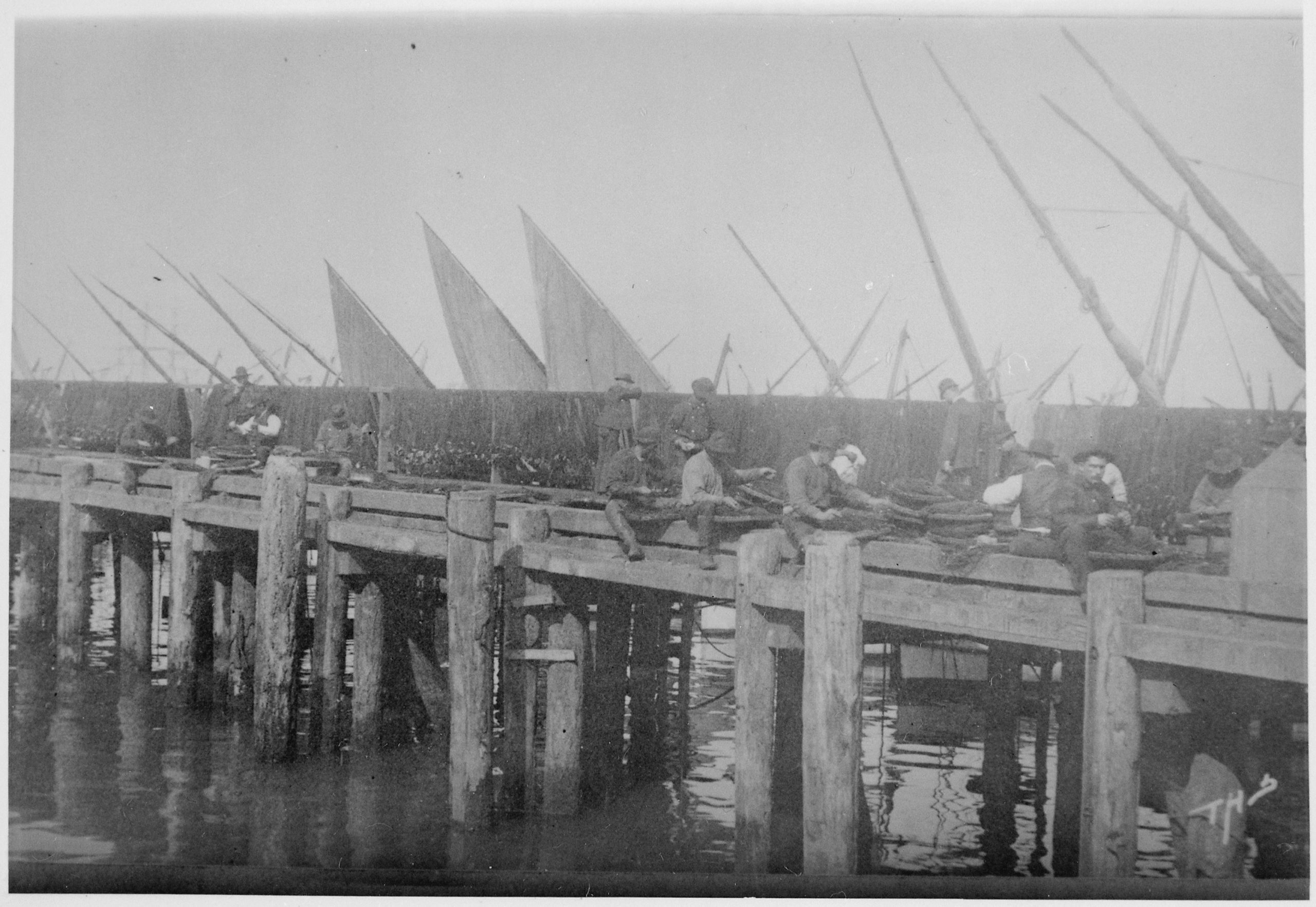
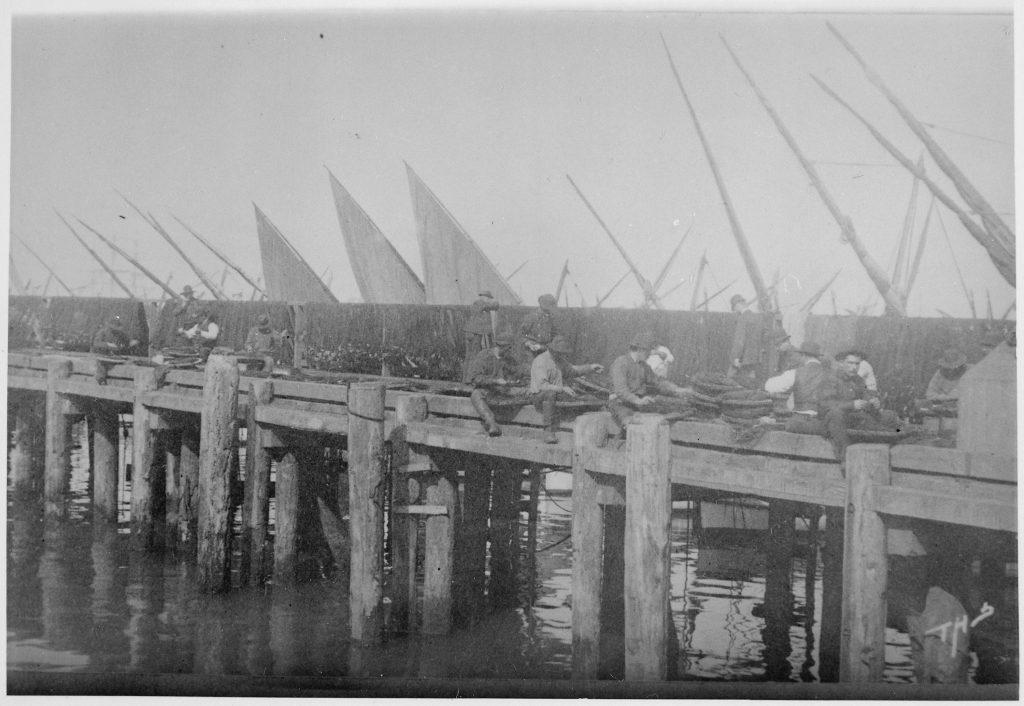
Some Italian surnames seem to carry a very precise atmosphere: salt, still water, fishing nets drying in the open air, boats pulled ashore, harbors and landing places. They do not always tell a maritime story in a direct way, but they can preserve a valuable clue about how a family was recognized inside a community.
When a surname recalls the sea or water, it is tempting to imagine fishermen, sailors or families who lived along the coast. Sometimes that image is close to the truth. At other times, the name may come from a nickname, a place, a house near water, or a trade only indirectly connected with maritime life. This is why the surname should be read with curiosity, but also with caution.
In family history research, the real point is not to decide abstractly what a surname “means.” The point is to understand whether a possible meaning fits the records, the oldest places where the family appears, and the different forms the surname may take over time.
The Sea in a Surname Does Not Always Mean a Coast
Surnames such as Marini, Marinelli and Marinaro look close because they belong to a similar field of meaning. Yet they should not be treated as the same family, or as names with one single origin. Linguistic similarity is a starting point, not a proved relationship.
Marini may be read in connection with personal-name forms, nicknames or a general reference to the sea. Marinelli adds a suffix that may point to a derived, familiar or local form. Marinaro, on the other hand, seems closer to the idea of a person connected with navigation or maritime life. These nuances are interesting, but they become truly useful only when they meet a territory and a documentary chain.
If a Marini family appears for many generations in an inland town, the surname should not be forced into a coastal explanation. It may have a different history, or preserve a much older memory. If the same surname appears in a context of harbors, fishing, trade and mobility, the maritime hypothesis deserves more attention.
Fishing, Fish and Water Trades
The most immediate group is the one connected with fishing. Pescatori speaks quite clearly: it points toward the trade or environment of fishermen. Even here, however, the surname alone does not prove that your documented ancestor was a fisherman. It may refer to an earlier origin, a nickname, or a family already identified in that way before the records you have found.
Pesce and Pesci are more open. They may evoke water and fish, but they may also come from nicknames, personal features, symbolic images or local uses of the word. The singular and plural forms should not be confused: they may be close, but they must be followed separately in the archives.
When researching surnames of this kind, pay close attention to occupations recorded in marriage and death records. Civil and parish records may mention fishermen, sailors, boatmen, shipwrights, dock workers or merchants. Witnesses can also matter: if people around the family repeatedly belong to similar trades, the social context becomes easier to read.
Boats, Ships and Ports: Concrete Words, Different Stories
Some surnames seem to come from objects or places of maritime life. Barca recalls a simple, everyday boat; Nave points to a broader word, almost symbolic in sound; Porto suggests a harbor, a place of arrival and departure.
These words may have grown from a trade, a dwelling place, an origin or a recognizable personal feature. A family called Porto does not necessarily descend from someone who worked in a harbor. The name may have identified people who lived near a place called that way, or who came from a harbor area in the eyes of the community that received them.
Lo Porto adds another interesting element: the article before the name. In many Italian surnames, articles, prepositions and particles can be stable parts of the form, but in old records they may also shift. It is useful to search for the full form and for nearby spellings, without assuming that every variant is genealogically equivalent.
Water as Place: Springs, Rivers, Banks and Family Landscapes
Not all water surnames speak of the sea. Acqua, Dellacqua and Acquaviva may lead toward a smaller landscape: a spring, a stream, a water source, a place known in the daily life of the community.
Fiume and Fiumi open another possibility: the relationship with rivers, crossings, natural boundaries, cultivated land near a bank. In many communities, water was not just a background. It shaped work, property, routes, parish boundaries and economic relationships.
This is why surnames connected with water are often more geographical than they first appear. They do not only name a natural element; they may suggest how a family was placed in space. In records, this clue may appear through district names, house names, territorial descriptions, cadastral maps and property registers.
When the Surname Meets a Region
In some searches, a maritime surname becomes more meaningful when it is connected with regions where the relationship with the sea was historically central. If a surname such as Marinaro, Pescatori or Porto appears in families rooted in Sicily, Campania, Puglia, Veneto, Calabria or Sardinia, the context can help interpret the clue more carefully.
This does not mean the surname “belongs” to one region only. It means that the history of a family is always understood inside precise places. The same form may appear in different areas and tell independent stories. One family line may have grown near the sea; another may have received the same surname for entirely different reasons.
The Case of Surnames That Seem to Name an Origin
A surname such as Mazzara may suggest an origin or a territorial link, but here too shortcuts should be avoided. Surnames that resemble place names are fascinating because they may preserve a memory of movement: a person who arrived from elsewhere, a family recognized by its origin, or a group established in a new community.
Similarity with a place, however, is not proof. Research must begin from the first secure document in your family line: a birth record, marriage, baptism or emigration document. Only after that does it make sense to ask whether the surname really preserves an older geographical memory.
Variants: Where the Trail Is Lost and Found Again
In old records, forms may change. A clerk, priest or civil officer could write a surname according to local usage, pronunciation or personal spelling habits. For surnames of water and the sea, this is especially important because many words are simple and recognizable. For that very reason they may develop articles, plurals, merged forms or small alterations.
If you are researching Dellacqua, notice how the particle is handled. If you are researching Lo Porto, check whether the article remains separate, is joined to the surname or disappears in some records. If you are working on Pesce and Pesci, do not move from one to the other without documentary proof: one letter may mark a variant, but it may also mark two distinct families.
Which Records Can Really Help
The first step is always the family line: parents, grandparents, great-grandparents, town by town, generation by generation. But with surnames linked to the sea or water, some records can become especially useful. Marriage records may give occupation, residence and parentage. Death records may preserve a trade practiced for decades. Parish registers may show godparents, witnesses and neighboring families.
In some searches, notarial records, cadastral registers, military draft lists, emigration papers, port records or documents connected with trades and guild-like organizations may also help. They will not always be available, and they will not always speak directly about the surname. But they can rebuild the environment in which a family lived: the neighborhood, work, movement and relationships with other families.
The most useful question is simple: does the surname fit what the records show? If it does, it becomes a strong clue. If it does not, it remains part of the story, but it should not guide the interpretation by itself.
A Maritime Surname Does Not Make All Families the Same
The greatest risk is connecting people too quickly because they share an evocative name. Two Marinelli families, two Pesce families or two Dellacqua families may have no recent relationship at all. They may carry the same surname because the word was understandable, because it became stable in different places, or because separate branches followed independent paths.
To recognize a relationship, you need a continuous chain of records. The surname helps you ask better questions, but proof begins when documents connect one generation to the previous one. In genealogy, an evocative name can open a door; it cannot walk through it for you.
How to Read Your Surname If It Speaks of Sea or Water
If your surname belongs to this area, begin with the exact form found in the most recent documents of your family. Then move backward in time and record every variation. Check whether the surname remains in the same town, moves elsewhere, appears in nearby hamlets, or changes spelling between parish, civil and emigration records.
When you find the oldest place, look at the historical and social landscape: watercourses, harbors, fishing activity, mills, trade, neighborhoods connected with maritime work, and families with similar occupations. You do not need to force confirmation. You need to let the surname and the documents correct each other.
That balance is where a surname becomes truly useful: not as a ready answer, but as a clue that can guide a more precise search.
Conclusion
Italian surnames linked with the sea, water, fishing and ports tell an old story about families and environment. Some seem to speak of trades, others of places, others of nicknames or origins. Their strength lies in this richness.
For anyone searching family history, the surname is the first signal. The records, however, remain decisive: they are the ones that show whether that signal leads to a boat, a river, a harbor, a trade or simply to a word that became a family name.

Leave a Reply